A landmark ruling from Australia exposes a multi-billion rupee question for Indian composers, labels, and artists: Who owns a song when a machine writes it? Ignoring the answer is a risk we can no longer afford.
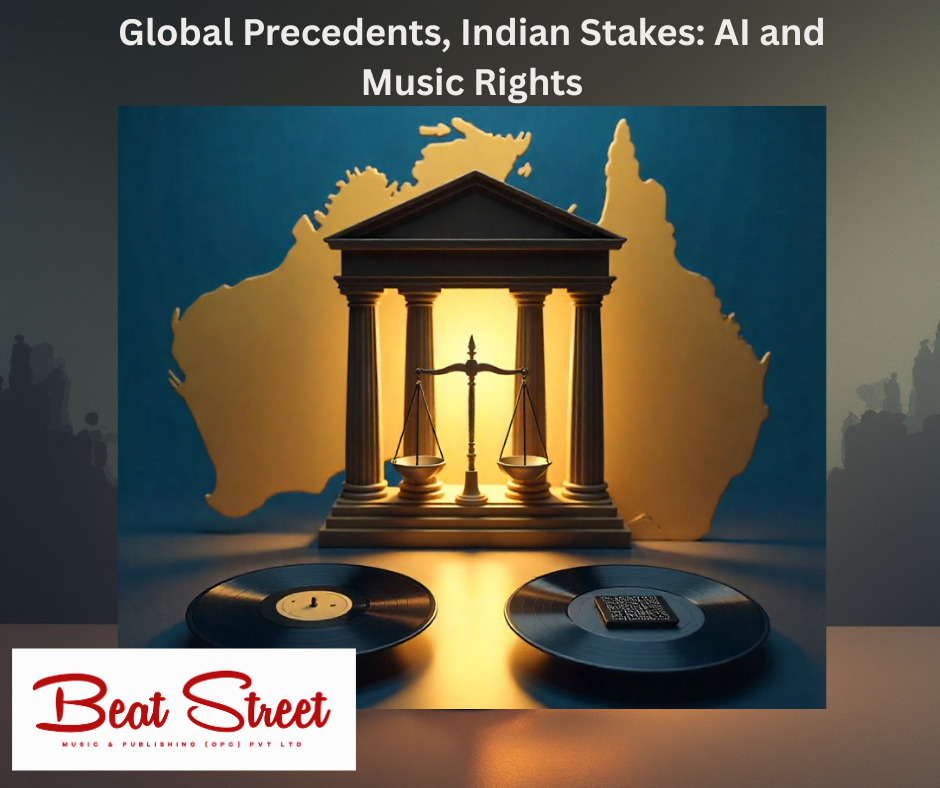
Introduction: The Ghost in the Machine
A recent ruling in Australia has drawn a line in the sand: without a human author, there is no copyright for works created by artificial intelligence.
While this decision centred on patents, its echo will be felt in music rights worldwide. What might seem like a legal technicality is, for Indian composers, lyricists, labels, and artists, a looming financial fault line. The ground beneath our industry is shifting, and this precedent is the first major tremor.
What Happened in Australia and Why It Echoes in India
In Commissioner of Patents v Thaler, Australia’s Federal Court ruled that only a natural person can be an inventor. An AI system, no matter how sophisticated, cannot be recognised as the creative mind.
The logic is simple: human authorship matters. This principle is a ticking time bomb for global copyright, especially as the line between human and machine made art blurs.
For India, the implication is immediate and profound. A song generated by AI in a Mumbai studio could be deemed to have no owner, potentially landing in the public domain in markets that follow this precedent. The result is massive economic damage, as Indian creations generate global value that their human inspirations cannot claim.
The Indian Context: A Regulatory Vacuum Meets an AI Flood
While Australia lays down the law, India operates in a regulatory vacuum. We lack a clear legal framework for AI and creative ownership, even as our streaming platforms are flooded with AI assisted tracks.
This leaves us with critical, unanswered questions. What is the legal status of these AI songs? Who owns them? Who collects the royalties when a machine generated track goes viral?
In the absence of law, default practices and private contracts will shape the future. Letting distributors and labels set these precedents by default is a high stakes gamble with our entire creative economy.
The High Stakes Implications for India’s Stakeholders
For Composers and Lyricists
The threat is personal. Your unique melodic signature or lyrical style can train an AI that then produces music in your voice, without your consent or compensation. The Australian precedent, however, gives you a powerful argument: copyright is a human right. The central question shifts to, “Where is the human hand in this creation?”
For Labels and Publishers
The threat is to your assets. Investing in and monetising a catalogue of AI generated works is a massive financial risk if their copyright is unenforceable. The value of your entire catalogue depends on legally defensible ownership. The imperative is to develop a clear AI rights policy for every artist you sign and every project you greenlight.
For Artists and Singers
The threat is to your identity. Your vocal likeness, the very texture of your voice, can be cloned and deployed without your control, and more critically, without your pay. The need for explicit, contractual protection for your name, image, and voice is no longer a luxury. It is a business necessity.
A Strategic Blueprint for India: What We Must Do Now
Industry Body Leadership
Organisations like the IPRS and IMI must take the lead. They have a responsibility to lobby for legislative clarity, using the Australian decision as a powerful blueprint. The core principle is non negotiable: copyright is anchored in human authorship.
The Strategic Contract Review
While we wait for the law to catch up, our best defence is in the fine print. As a strategist, I advise that every new contract for artists, composers, and producers must be reviewed to explicitly address ownership of AI assisted works, consent for using existing work to train AI models, and explicit rights over a vocal or stylistic likeness. This is no longer future proofing. It is present day due diligence.
The Metadata Moonshot
In an ocean of AI generated content, human authored works must be impeccably tagged. Robust, granular metadata is the lighthouse that ensures your work is traceable, attributable, and paid. It is the technical foundation that answers the legal question: “Was this made by a human?”
Final Thought: Lead or Be Led
Australia’s decision is our wake up call. India’s music industry stands at a crossroads. We can be passive bystanders, watching as global precedents dictate our future, or we can be proactive architects of a system that protects human creativity.
Drawing a clear line does not stifle innovation. It channels it responsibly, ensuring technology amplifies our artists rather than erasing them.
Your Call to Action:
The rules for the next decade of music are being written now. The time for strategic planning is today. If you are a label, publisher, or creator looking to build a strategy that protects your rights and revenue in the age of AI, let’s connect. I can help you navigate this new landscape and ensure your business is built for the future.
Leave a Reply