Artificial intelligence is no longer hovering at the edges of music creation. It is already inside the workflow, whether we have named it or not.
From prompt to song generators to AI assisted mastering, stem separation, vocal cloning and arrangement tools integrated into DAWs, music making machines are no longer experimental novelties. They are production utilities.
The conversation, however, keeps oscillating between two extremes. On one side, AI will democratize music creation. On the other, machines are replacing human artistry.
This mirrors the concerns explored in the human authorship dilemma as machines become embedded in creative workflows.
The reality is more nuanced.
The real shift is not creative extinction. It is structural transformation.
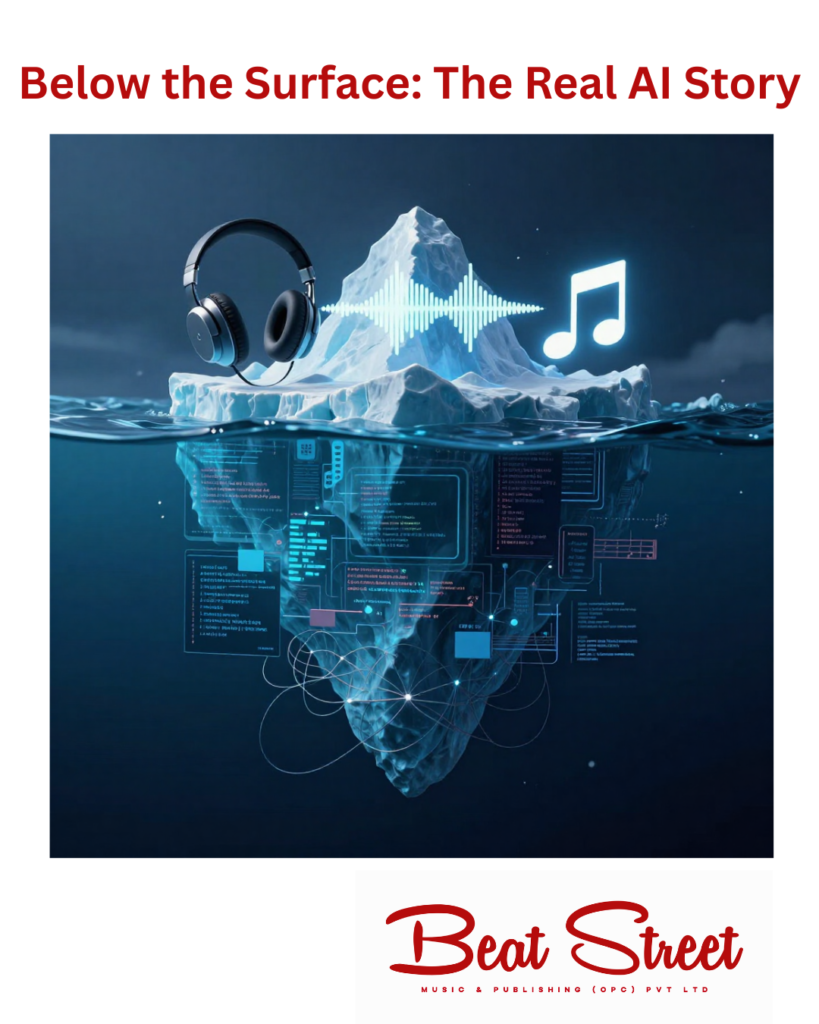
What Music Making Machines Are Actually Doing
Today’s AI tools are not dreaming up culture. They are accelerating ideation. They are generating rough sketches. They are assisting with arrangement and harmony. They are producing demo vocals. They are creating reference tracks. They are speeding up production cycles.
In many studios, AI is becoming an intelligent assistant, not an autonomous artist.
This distinction matters.
There is a fundamental difference between assistance and replacement. Most professional creators are not surrendering authorship to machines. They are using AI as a co pilot to compress time.
But when time compresses, economics change.
Volume vs Meaning
AI dramatically increases output volume. Thousands of tracks can be generated in minutes. That alters the supply curve of music.
But scale is not the same as meaning.
Audiences still respond to context, narrative and identity. A song is rarely consumed as pure sound. It is consumed as expression, personality, cultural signal or emotional memory.
Machines replicate patterns at scale. They do not originate lived experience.
However, the market does not always reward originality first. It rewards accessibility and distribution.
And in a system optimized for accessibility, the question of who created what and who owns it quickly becomes secondary to what can be used next.
Which brings us to the real tension.
The Rights and Governance Question
For anyone building a career on creative work, three questions are no longer theoretical.
First, who owns AI assisted works.
Second, what happens when training datasets include copyrighted music without disclosure.
Third, how will value be attributed if machine outputs compete directly with human catalogues.
This is not philosophical. It is commercial.
If AI systems are trained on vast catalogues of existing music, data provenance becomes central. Transparency around training data is no longer a moral issue alone. It becomes an economic one. As discussed in the TRAIN Act and India AI Summit analysis, visibility into training datasets may become foundational to future negotiations.
For composers and publishers, this could reshape negotiations in the coming decade. Disclosure, licensing models for training use and attribution frameworks may become standard discussion points.
If infrastructure for AI accelerates, governance must keep pace.
Otherwise, we risk building a high speed creative economy on ambiguous foundations.
The Catalogue Effect
There is another dimension rarely discussed.
If AI can generate stylistically similar music at scale, legacy catalogues may either gain premium value because of authenticity or face downward pricing pressure due to infinite substitutes.
Which outcome prevails depends on regulation, licensing clarity and audience psychology.
In a world flooded with machine generated music, verified authorship and well documented rights may become more valuable, not less.
Clean metadata, ownership clarity and enforceable rights could become competitive advantages.
The Hybrid Creator
The future likely does not belong to machines alone. Nor to purists who reject them.
It belongs to hybrid creators.
Those who understand creative craft. Those who understand technology. Those who understand rights and publishing. Those who understand audience positioning.
AI literacy and rights literacy will sit side by side.
The creator who knows how to use AI tools responsibly while protecting their catalogue will have leverage.
The creator who ignores both may struggle.
What Creators Can Do Now
For creators reading this, the work is already clear. Audit your catalogue. Clean your metadata. Understand what you own. The early career publishing blind spot shows why waiting until value scales is often too late.
These are not administrative tasks anymore. They are strategic assets.
Assistance Is Here. Accountability Is Next.
Music making machines are not waiting for policy to catch up.
The question is not whether AI will participate in music creation. It already does.
The more important question is whether creators will have visibility, negotiating power and clarity in a system increasingly shaped by algorithms trained on human output.
Innovation is accelerating. Transparency must accelerate with it.
In the long run, the sustainability of music will not depend on whether machines can compose.
It will depend on whether the ecosystem values human contribution clearly enough to protect it.
And that is a governance choice, not a technological inevitability.
I work with composers, publishers and rights holders on catalogue clarity, metadata readiness and navigating the structural shifts reshaping music. If you are preparing for an AI aware future, these conversations are worth having early.
Leave a Reply