As artificial intelligence transforms music production, are we paying enough attention to how the next generation of musicians will learn, grow and find their place in the industry?
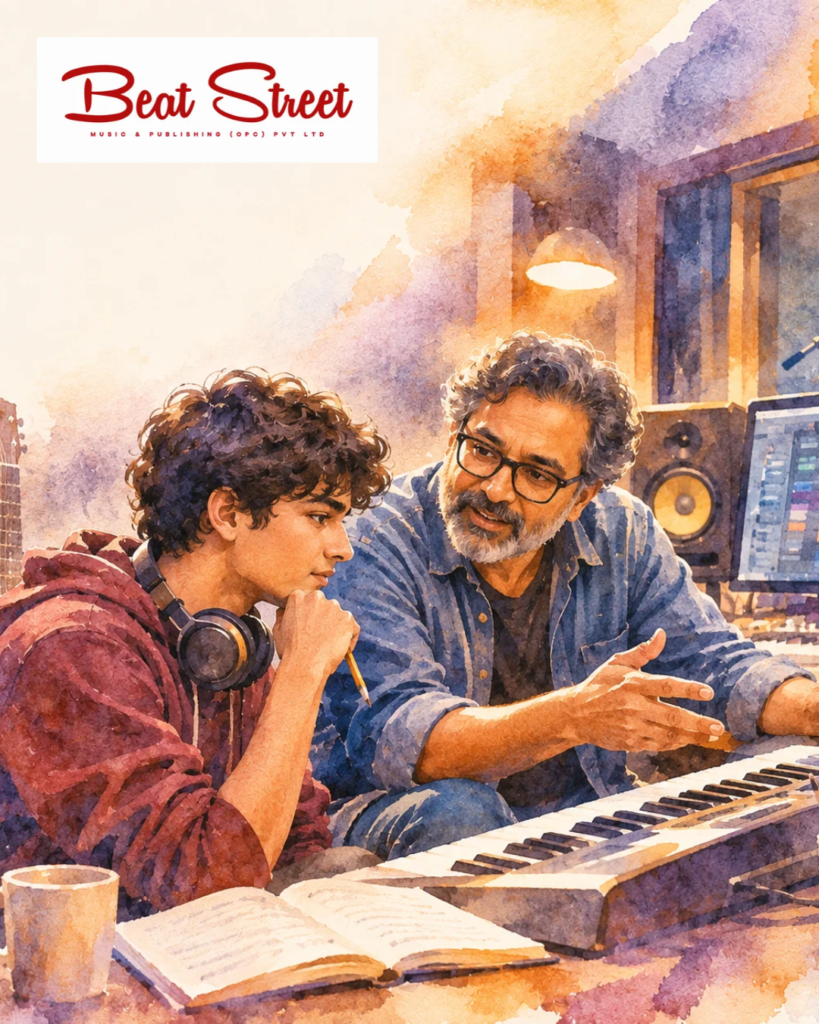
Imagine a young music arranger beginning their career today.
Not long ago, they might have started by assisting an established composer, programming a basic track, preparing a demo or working on a small recording assignment.
The money may not have been great. Sometimes, there may have been very little money at all.
But the experience mattered.
They would learn how a composer thinks, how a singer interprets a melody, why a particular instrument works in one arrangement but not another, and how a piece of music changes when different people bring their ideas into the room.
They would make mistakes, receive feedback, try again and gradually develop their own musical identity.
Now imagine the same young arranger entering the industry five years from today.
Will those opportunities still exist?
Or will much of the work that once helped musicians learn their craft already be handled by AI?
I think this is a question the music industry needs to start asking.
Not because AI is bad for music. Quite the opposite. Its creative possibilities are extraordinary.
But in our excitement about what technology can produce, we may be overlooking something equally important.
Who will develop the musicians of tomorrow if the work that once helped them become musicians begins to disappear?
The Creative Advantage Is Real
I don’t see much value in pretending that AI isn’t changing music production for the better.
Consider a composer working on a new song.
They have a melody in mind but aren’t sure whether it would work better with an acoustic arrangement, a contemporary electronic sound or a completely different musical treatment.
Earlier, exploring these possibilities could require considerable time, access to musicians and production resources.
Today, AI can help generate ideas, experiment with arrangements and test different directions in a fraction of that time.
For someone with limited resources, that can be a remarkable advantage.
A young songwriter in a small town may not have access to a professional studio, an experienced arranger or a network of musicians. AI can help that person experiment with ideas that might otherwise remain unheard.
Even established composers can use it to accelerate their creative process.
And I believe there’s nothing inherently wrong with that.
Music production has always evolved with technology. Multitrack recording, synthesisers, drum machines, digital audio workstations and virtual instruments all changed how music was made.
Each brought new possibilities and required musicians to adapt.
AI represents another significant change. But there’s something different about a technology that can increasingly generate a complete musical arrangement rather than simply help a musician create one.
Earlier technologies changed how musicians worked. AI also raises the possibility that certain assignments may no longer require a musician at all.
And that deserves a closer look.
What Happens Between the First Idea and the Final Song?
A composer may begin with a melody.
But the song that eventually reaches the listener is often the result of many creative decisions.
An arranger suggests a different rhythm. A guitarist plays something unexpected. A percussionist introduces a pattern that changes the energy of the track. A singer interprets a line differently from how the composer originally imagined it.
Sometimes, the most interesting moment in a recording session is something nobody planned.
One musician tries an idea. Another responds. Someone makes a mistake that turns out to be worth keeping.
The music moves in a direction that wasn’t obvious at the beginning.
That’s one of the things I’ve always found fascinating about the creative process.
Of course, not every recording session produces something extraordinary. Musicians repeat familiar patterns too. And an AI-assisted arrangement can be imaginative when guided by someone with a strong creative vision.
But human collaboration offers something beyond the finished sound.
It creates an exchange of ideas between people with different experiences, influences and musical instincts.
And for a young musician, that exchange can be an education in itself.
When an arranger works alongside an experienced composer, they’re not just completing an assignment. They’re learning how to make decisions.
Why leave a particular section almost empty? Why introduce an instrument later instead of earlier? Why does a technically perfect arrangement sometimes fail to connect emotionally?
These are things musicians learn through listening, experimentation, disagreement and experience.
AI may help someone explore a hundred arrangements.
But knowing which arrangement actually serves the song is still a creative judgement.
And that judgement has to develop somewhere.
The Work That Pays the Bills Also Builds the Skills
Not every musician begins their career by working on major albums or successful films.
Many start with smaller assignments.
Advertising jingles, demo recordings, background music, programming work, independent releases and assisting established professionals have traditionally provided opportunities to earn, learn and build relationships.
These assignments may not attract much attention. But they are often where a musician begins to understand the profession.
Now consider what happens when some of that work can be completed through AI.
A producer who previously hired an arranger for a basic demo may decide to generate one instead.
A small advertising agency may use AI-generated background music rather than commission an original piece.
An independent creator may no longer need a session musician for every project.
From the customer’s perspective, these decisions are understandable.
If the output meets the requirement, costs less and arrives faster, why wouldn’t they consider it?
But there’s another side to that efficiency.
The assignment that a business no longer needs to pay for may also be the assignment through which a young musician would have gained experience.
And when enough of those opportunities disappear, the consequences could go beyond lost income.
We may gradually weaken the very process through which new professionals enter the industry.
That is a different problem from job displacement alone.
It’s a question of how future talent will develop.
Who Will Teach the Next Generation?
Think about how an experienced music arranger reaches that position.
They may begin by watching someone else work. Then they assist on a recording, programme a section, suggest an idea or take responsibility for a small part of a project.
Over time, those small contributions become larger ones.
They learn what works, what doesn’t and why.
Eventually, they develop the confidence to make their own creative decisions. And perhaps, years later, they’re the experienced professional guiding someone who is just starting out.
This has never been a perfectly organised system. Opportunities have often depended on relationships, access and being in the right place at the right time.
But for many musicians, everyday professional work has also been their training ground.
I think this is something we rarely consider when discussing the economics of music production.
A business looks at a demo or recording assignment and sees a cost.
For the young musician working on it, that same assignment could be the beginning of a career.
Both perspectives are valid.
But only one appears immediately in the production budget.
If AI changes the economics of those early assignments, we need to think about what replaces the learning opportunities they once provided.
Because the experienced arrangers, producers and instrumentalists working today were beginners once.
And many became what they are because somebody gave them an opportunity before they had a reputation.
Will We Know How to Make Music, or Only How to Generate It?
Someone may use AI to generate a beautiful orchestral arrangement without knowing much about orchestration.
That doesn’t make the result meaningless.
The person may have made important creative choices about the mood, structure, direction and final selection.
But it raises an interesting question.
If a young creator can produce almost any sound without learning how instruments interact, will they still feel the need to develop that understanding?
Some certainly will. Curiosity and ambition won’t disappear because technology becomes more capable.
Others may decide they don’t need to.
And perhaps that will be enough for the kind of music they want to create.
I don’t believe every music creator needs to follow the same traditional learning path. Technology has always opened doors for people who didn’t have access to formal training.
But there’s a difference between directing a tool towards a desired result and having the musical knowledge to create, interpret and reshape that result independently.
Both abilities may have a place in the future.
What concerns me is what happens if the market gradually stops recognising the value of deeper musical skills.
A good arranger brings more than the ability to assemble instruments around a melody. They understand musical space, emotional progression, performance, the singer’s strengths and the demands of the composition.
They also know when not to add something.
That understanding takes time to develop.
AI may make the tools of music production more accessible than ever before. But access to a tool doesn’t automatically create the experience needed to use it with imagination and judgement.
And if fewer young musicians get the opportunity to develop those qualities through professional work, we may not notice the consequences immediately.
They could become visible years later.
Talent Development Cannot Be Someone Else’s Problem
Music businesses naturally look for efficiency.
A production company wants to complete projects within budget. A label wants to manage costs. A composer wants to deliver good work on time.
AI can help with all of these objectives.
But reducing the cost of producing music and developing the people who will shape its future are two different things.
And the second cannot be left entirely to chance.
I’m not suggesting that every production should hire musicians for work that genuinely doesn’t require them. Nor should businesses preserve inefficient practices simply because they’re traditional.
But perhaps we need to think differently about how young musicians gain experience in an AI-assisted industry.
An established composer might use AI to explore several musical directions and then involve a young arranger in developing the chosen idea.
A production company could bring emerging musicians into selected projects, giving them the opportunity to participate in real creative decisions rather than limiting their involvement to technical tasks.
Labels that regularly commission music could create opportunities for younger musicians to work alongside experienced professionals.
Not every independent producer can afford to invest in formal training or mentorship. That’s a commercial reality.
But larger music businesses, industry associations, educational institutions and experienced professionals may have opportunities to contribute.
And there is a business reason to do so.
An industry that depends on skilled musicians has an interest in ensuring those skills continue to develop.
If everyone benefits from experienced creative professionals, it is worth asking who is helping the next generation become experienced.
Music education will need to evolve too.
Young musicians should learn how to use AI tools. They should be comfortable experimenting with new technology.
But they also need opportunities to listen critically, develop arrangements, work with performers and make creative decisions that go beyond accepting a generated output.
The musicians who become most valuable in an AI-assisted environment may not necessarily be those who can generate the most music.
They may be those who understand music deeply enough to know what to do with the possibilities technology creates.
Are We Thinking Far Enough Ahead?
As we approach the end of 2026, AI is becoming part of the commercial music ecosystem.
Music companies are exploring new licensing arrangements. Musicians are experimenting with new tools. Independent creators have access to production capabilities that would have been difficult or expensive to obtain only a few years ago.
These are important developments.
And I don’t believe the answer is to resist technology simply because it changes how work is done.
If AI helps a composer complete in one day what previously took a week, that’s a meaningful improvement.
If it allows a young songwriter in a small town to develop and share music that would otherwise remain unheard, that’s a genuine opportunity.
But if the same technology gradually removes the assignments through which aspiring arrangers, instrumentalists and programmers learn their profession, we need to understand what that means for the future.
The music industry has always depended on more than the songs it produces.
It depends on people who learn, experiment, collaborate and eventually create something the industry hasn’t heard before.
AI can make that creative journey faster and more accessible.
But if we remove too many of the opportunities through which musicians develop their skills, we may discover that efficiency comes with a long-term cost.
AI can help us make more music. But who is investing in the people who will make music worth listening to tomorrow?
Written by Amit Dubey
Founder, Beat Street Music & Publishing | Music Business Strategist
Leave a Reply