A composer gets the call every creator dreams of. Their track has been selected for a major web series. The deal is signed. The episode goes live. Everything looks like a win.
The show performs well. The music is heard across episodes. There is visibility, reach, and recognition. But months later, when royalties are expected to reflect, the numbers don’t match. Or worse, nothing shows up at all.
This is not rare, and it is not always because of a bad deal. In many cases, the problem starts much earlier. Not at the point of payment, but at the point of documentation.
When music moves into films, series, and OTT platforms, it doesn’t just travel as audio. It moves through systems. These systems depend on how clearly the music is identified, how ownership is defined, and how consistently that information flows across stakeholders.
This is where things begin to break.
A cue sheet is not filed, or it is filed with incomplete information. A cue sheet tells collecting societies which music was used, where it appeared, and who should be paid. If it is missing or incorrect, the system simply does not know to pay.
Ownership splits may be agreed but not documented consistently. Identifiers don’t match across systems. Publisher details are missing or outdated. Different versions of the same track exist in different places without a single, reliable reference point.
Individually, none of this looks critical. But together, it creates a system with no single version of truth. As a result, royalties don’t reconcile cleanly, payments become difficult to track, and the actual gap becomes hard to identify.
One of the biggest misconceptions in sync deals is that the sync fee is the whole story. It is not. The sync fee is only the upfront payment. The real value often sits in what follows—background usage across episodes, re-runs, international distribution, and platform-level reporting.
This is where long-term royalties are generated. It is also where most of the leakage happens.
A track used in a show that streams globally generates micro-payments across platforms, territories, and usages. Without accurate documentation, those payments never find their way back.
OTT platforms have amplified this complexity. A single show can move across territories, languages, versions, and multiple rights environments. Each layer depends on accurate and consistent data. If that foundation is weak, the system does not break immediately. It continues to function, but with gaps.
This is why the issue often goes unnoticed until someone starts asking: why don’t the numbers add up?
By then, the problem is no longer about a single track. It becomes a coordination issue across platforms, publishers, labels, societies, and internal systems, each holding a different version of the same information.
Fixing it is not just technical. It requires aligning data, validating ownership, and reconstructing how the music was originally documented. In many cases, not all of that information is easily recoverable.
Most people focus on getting the music placed. Very few focus on how that placement translates into long-term revenue.
If your music is already part of films, series, or OTT platforms, and the numbers don’t fully add up, the issue usually starts much earlier than the deal or the release. A closer look at how the music was documented, tracked, and reported often reveals where that value is slipping.
Written by Amit Dubey Founder, Beat Street Music & Publishing
There is a common belief that metadatacan always be corrected later, once the song starts performing.
In reality, that window is smaller than most people think.
By the time corrections are made, a large part of the initial value has already moved through the system.
And once it moves, it does not always come back cleanly.
Some of it sits unclaimed.
Some of it gets absorbed into broader distributions.
Some of it becomes too complex to trace without significant effort.
What looks like a small delay at the start often turns into a much larger recovery problem later.
Why this gets complicated
Metadata does not live in one place.
Recording data, publishing data, platform data, and society data often move through different systems that do not always speak to each other in real time.
A small inconsistency at the point of release can show up in multiple places in different ways.
Which is why fixing it later is not just about updating one field.
It is about reconciling across systems.
Speed is easy. Accuracy is harder.
But in music, accuracy is what determines whether value flows back correctly.
If the data is not right at the start, you are not just delaying revenue. You are making it harder to recover.
Document first. Release second. Because once data moves through the system incorrectly, it does not just get delayed, it gets harder to trace, match, and claim.
If you are releasing music and want to ensure your catalogue is structured for accurate and complete royalty flow, this is where getting the foundations right makes all the difference.
For most of music history, distribution was the wall that kept most artists out.
Recording a song was only the first step. Getting it into stores, onto radio, or into the hands of listeners required infrastructure, capital, and industry access. Labels controlled that system because they controlled the pipes.
Streaming changed that.
Today, a song can reach a global audience within minutes of being uploaded. An artist in Mumbai, Lagos or São Paulo can release music and be available everywhere at the same time. Distribution, once the most powerful gatekeeper in music, has largely been solved.
But even as the industry settles into streaming, another shift is already testing the foundation beneath it.
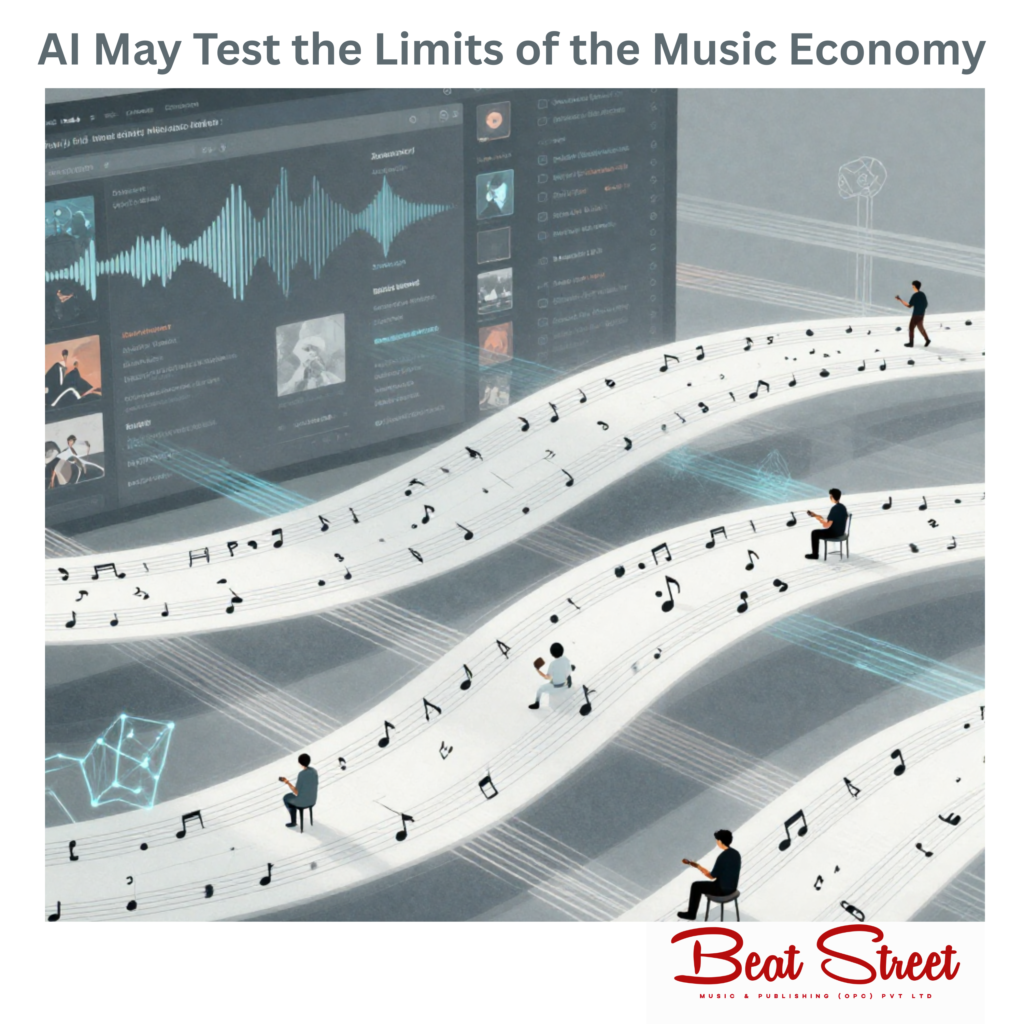
Artificial intelligence is starting to change not just how music is distributed, but how easily it can be created.
And that could test the limits of the streaming model in ways the industry is only beginning to understand.
From Scarce Distribution to Expanding Supply
Streaming platforms were built around the idea of abundant music. Unlike physical formats, there was no shelf space to run out. Digital platforms could host millions of songs without worrying about storage in record stores or manufacturing costs.
This abundance allowed more artists to release music than ever before. Independent creators, small labels and bedroom producers could all participate in the global music economy.
But the basic assumption behind this system was still that music required human time and effort to create.
AI changes that assumption.
With generative music tools improving rapidly, it is becoming possible to produce large volumes of music in very little time. A single creator can generate dozens or even hundreds of tracks using AI assisted workflows.
What was once an industry limited by the pace of human creativity could become one defined by automated scale.
This raises a question that the streaming model has not yet fully confronted.
What happens when the supply of music expands faster than the systems designed to track and value it?
The Pressure on the Streaming Economy
Streaming services distribute revenue based on listening activity. The total subscription and advertising revenue forms a pool that is then divided across the music that people stream.
When the catalogue grows gradually, the system adapts.
But if the number of tracks entering platforms begins to increase dramatically, the economics become more complex.
More music competing for attention means each individual track is fighting for a smaller share of listening time. It also means the royalty pool must stretch across an ever expanding catalogue.
The challenge is not just volume.
It is attribution.
If AI generated music begins to appear at scale, the industry will have to answer some difficult questions.
Who owns the music that AI systems generate? Who should be credited when training data includes existing songs? How should royalties be distributed when the line between human and machine creation becomes blurred?
These questions are already beginning to surface across the global music industry.
Platforms Are Beginning to Respond
Streaming services and industry bodies are starting to recognise that AI will require new frameworks.
Some platforms are experimenting with ways to identify or detect AI generated music, while others are exploring policies around training data and transparency.
The objective is not to stop technological progress. AI will undoubtedly become part of the creative process in many areas of music production.
The real issue is governance.
The industry needs systems that can distinguish between human created works, AI assisted creations and fully automated outputs. Without clarity, attribution and royalty distribution could become increasingly difficult to manage.
And if listeners cannot easily distinguish what they are hearing, trust in the system may also be affected.
The Implications for Emerging Markets Like India
For markets such as India, this shift carries both opportunity and risk.
India is already one of the fastest growing streaming markets in the world. Millions of listeners are entering the digital music ecosystem every year. Artists from independent scenes, regional languages and new genres are finding audiences that were previously impossible to reach.
At the same time, the infrastructure around rights, metadata, and catalogue documentation is still evolving. In markets where streaming is growing faster than the documentation systems behind it, AI could widen the gap between music that is heard and music that is properly tracked.
As AI generated music becomes more common, the importance of accurate metadata, ownership records and rights management will only increase. Without strong documentation systems, distinguishing between legitimate works and automated outputs could become much harder.
This is where the next phase of the music industry will likely be decided.
Not only by creativity, but by the systems that support it.
A Reality Check the Industry Cannot Ignore
Signs of this shift are already beginning to appear across the global music industry.
AI generated tracks are increasingly appearing on streaming platforms. Some distributors and platforms have started introducing policies around disclosure and identification of AI created music.
Rights holders are also raising questions about how generative models are trained and whether existing catalogues are being used without proper licensing.
These conversations are not limited to the United States or Europe. They will eventually affect every streaming market.
For countries like India, where streaming growth is accelerating and millions of new listeners are entering the ecosystem each year, the pressure on rights documentation and metadata infrastructure could become even more visible.
The question is no longer whether AI will enter the music ecosystem.
The real question is whether the industry’s rights infrastructure can keep up with it.
What the Industry Must Solve Next
For decades, the music business focused on controlling access to distribution.
Streaming changed that. Music can now travel anywhere instantly.
The next challenge is different. It is about maintaining trust in the system that assigns value to music.
The industry will need stronger ways to answer three simple but increasingly difficult questions.
Who created the work. What data it was trained on. Who should be paid when it is consumed.
Without clear answers, the economics of streaming could become harder to sustain and harder for creators to trust.
Technology will continue to expand what is possible in music. That has always been true.
But every technological shift eventually forces the industry to strengthen the invisible systems behind it.
Rights documentation. Metadata accuracy. Attribution.
These quiet systems rarely get attention. Yet they are what ultimately determine whether creators are paid fairly and whether the music economy remains sustainable.
These systems are not glamorous.
But in the next phase of the music industry, they will determine who gets paid and whose work disappears into the noise.
If you are a label, publisher, or creator thinking about how AI, metadata, and rights management will shape the next phase of the music business, this is the moment to start building the right strategy. If you would like to explore how to strengthen your catalogue, rights framework, or royalty systems for this new landscape, let’s connect.
Written by Amit Dubey Founder, Beat Street Music & Publishing
Every few months, a familiar complaint resurfaces.
Songs are getting shorter. Hooks arrive faster. Bridges are disappearing. Albums feel less central than they once were.
The conclusion many people jump to is simple. Music has become worse.
But that explanation misses something important.
What changed is not creativity. What changed is the economic system that surrounds it.
And when the economics of distribution change, creative behaviour usually follows.
When Albums Paid the Bills
In the physical era, the economics of music were built around albums.
A listener bought a cassette or a CD. An artist earned a share from that sale. Labels invested heavily in recording because each successful album could generate meaningful revenue.
The incentive was clear. Make a body of work that people wanted to own.
Songs could take their time. Introductions were longer. Albums were designed to be experienced from start to finish.
The success of music depended on how many people chose to buy it.
Streaming changed that equation completely.
The Streaming Economy
Today most listeners access music through platforms such as Spotify, Apple Music and YouTube Music.
Instead of purchasing music once, listeners stream it repeatedly. Revenue is distributed across millions or billions of plays.
The result is a very different economic model.
A single purchase once generated a meaningful payment. Today songs earn fractions of a dollar per play, which means meaningful income depends on massive scale.
For artists and composers, this creates a new reality. Visibility and repeat listening matter more than ever before.
And that is where creative decisions start to shift.
They track when listeners skip. They observe whether a song is replayed. They measure completion rates.
These signals help algorithms decide which songs should be recommended to more listeners.
As a result, creators have gradually adapted their writing and production choices.
Hooks appear earlier in the song. Intros are shorter. The structure becomes more immediate.
In many cases, listeners now discover a song through a short clip on social media before hearing the full track on a streaming platform. Capturing attention quickly becomes part of the creative strategy.
This is not because artists suddenly forgot how to write complex music. It is because the environment rewards immediacy.
In a world where a listener can skip within seconds, the first moments of a song matter more than ever before.
The Indian Reality
The shift is particularly interesting in India.
For decades, the music industry here was driven by film soundtracks and physical sales. Music labels built vast catalogues through cinema. Revenue was closely tied to the success of films.
Streaming platforms changed that relationship.
Today, many songs are discovered through playlists, short form video platforms, and algorithmic recommendations rather than film releases alone.
Independent artists are reaching audiences directly. Regional music is travelling beyond linguistic boundaries. Old catalogues are finding new life through streaming discovery.
At the same time, the economics remain challenging for many creators.
High streaming numbers do not automatically translate into sustainable income unless rights, publishing, and catalogue ownership are structured carefully.
In a system where revenue accumulates across millions of plays, the accuracy of ownership data becomes critical.
This is why conversations around music rights, metadata, and catalogue clarity are becoming more important in India.
The structure of the industry is evolving along with the technology.
Scale Versus Meaning
One consequence of streaming is scale.
Technology now makes it possible to release more music than ever before. Thousands of tracks appear on platforms every day.
But volume is not the same as meaning.
Listeners still connect with songs because of emotion, identity, memory, and storytelling. Music is rarely consumed as pure sound alone. It carries cultural context.
Algorithms may recommend songs, but audiences ultimately decide which ones become part of their lives.
That human connection remains the foundation of music.
What This Means for Creators
For creators, the lesson is not to resist change. Every technological shift in music has reshaped how artists work.
Radio changed distribution. Television changed promotion. Digital downloads changed access. Streaming changed consumption.
The important question is how creators adapt strategically.
Understanding rights ownership, maintaining clean metadata, and managing catalogues thoughtfully are becoming essential skills.
In a system driven by scale and discovery, well documented catalogues and clear ownership structures can make a significant difference to long term value.
The Real Conversation
The conversation about music quality often misses the deeper point.
Songs did not suddenly become simpler because artists lost ambition.
They evolved because the environment changed.
Distribution shapes incentives. Incentives shape behaviour. Behaviour eventually shapes culture.
Streaming did not make music worse.
It simply rewrote the rules of how music survives.
I work with composers, publishers and rights holders on catalogue clarity, metadata readiness and navigating the structural shifts reshaping music. If you are preparing for an AI aware and streaming driven future, these conversations are worth having early.
Written by Amit Dubey Managing Director, Beat Street Music & Publishing
Artificial intelligence is no longer hovering at the edges of music creation. It is already inside the workflow, whether we have named it or not.
From prompt to song generators to AI assisted mastering, stem separation, vocal cloning and arrangement tools integrated into DAWs, music making machines are no longer experimental novelties. They are production utilities.
The conversation, however, keeps oscillating between two extremes. On one side, AI will democratize music creation. On the other, machines are replacing human artistry.
This mirrors the concerns explored in the human authorship dilemma as machines become embedded in creative workflows.
The reality is more nuanced.
The real shift is not creative extinction. It is structural transformation.
What Music Making Machines Are Actually Doing
Today’s AI tools are not dreaming up culture. They are accelerating ideation. They are generating rough sketches. They are assisting with arrangement and harmony. They are producing demo vocals. They are creating reference tracks. They are speeding up production cycles.
In many studios, AI is becoming an intelligent assistant, not an autonomous artist.
This distinction matters.
There is a fundamental difference between assistance and replacement. Most professional creators are not surrendering authorship to machines. They are using AI as a co pilot to compress time.
But when time compresses, economics change.
Volume vs Meaning
AI dramatically increases output volume. Thousands of tracks can be generated in minutes. That alters the supply curve of music.
But scale is not the same as meaning.
Audiences still respond to context, narrative and identity. A song is rarely consumed as pure sound. It is consumed as expression, personality, cultural signal or emotional memory.
Machines replicate patterns at scale. They do not originate lived experience.
However, the market does not always reward originality first. It rewards accessibility and distribution.
And in a system optimized for accessibility, the question of who created what and who owns it quickly becomes secondary to what can be used next.
Which brings us to the real tension.
The Rights and Governance Question
For anyone building a career on creative work, three questions are no longer theoretical.
First, who owns AI assisted works. Second, what happens when training datasets include copyrighted music without disclosure. Third, how will value be attributed if machine outputs compete directly with human catalogues.
For composers and publishers, this could reshape negotiations in the coming decade. Disclosure, licensing models for training use and attribution frameworks may become standard discussion points.
If infrastructure for AI accelerates, governance must keep pace.
Otherwise, we risk building a high speed creative economy on ambiguous foundations.
The Catalogue Effect
There is another dimension rarely discussed.
If AI can generate stylistically similar music at scale, legacy catalogues may either gain premium value because of authenticity or face downward pricing pressure due to infinite substitutes.
Which outcome prevails depends on regulation, licensing clarity and audience psychology.
In a world flooded with machine generated music, verified authorship and well documented rights may become more valuable, not less.
Clean metadata, ownership clarity and enforceable rights could become competitive advantages.
The Hybrid Creator
The future likely does not belong to machines alone. Nor to purists who reject them.
It belongs to hybrid creators.
Those who understand creative craft. Those who understand technology. Those who understand rights and publishing. Those who understand audience positioning.
AI literacy and rights literacy will sit side by side.
The creator who knows how to use AI tools responsibly while protecting their catalogue will have leverage.
These are not administrative tasks anymore. They are strategic assets.
Assistance Is Here. Accountability Is Next.
Music making machines are not waiting for policy to catch up.
The question is not whether AI will participate in music creation. It already does.
The more important question is whether creators will have visibility, negotiating power and clarity in a system increasingly shaped by algorithms trained on human output.
Innovation is accelerating. Transparency must accelerate with it.
In the long run, the sustainability of music will not depend on whether machines can compose.
It will depend on whether the ecosystem values human contribution clearly enough to protect it.
And that is a governance choice, not a technological inevitability.
I work with composers, publishers and rights holders on catalogue clarity, metadata readiness and navigating the structural shifts reshaping music. If you are preparing for an AI aware future, these conversations are worth having early.
This week, two AI conversations are unfolding in parallel: one about infrastructure, the other about ownership.
In New Delhi, the India AI Impact Summit 2026 is underway at Bharat Mandapam. Prime Minister Modi is meeting global technology leaders including Sam Altman and Sundar Pichai. Over 20 heads of state and 60 ministers have gathered to discuss three guiding Sutras: People, Planet, and Progress.
The focus is clear: build computing capacity, democratise AI access, and position India as a central player in the global AI ecosystem.
Union Minister Ashwini Vaishnaw has indicated that India could attract over $200 billion in AI and data infrastructure investment in the next two years, with approximately $70 billion already committed.
It is an impressive display of ambition.
Across the Atlantic, a quieter but equally consequential conversation is taking place. In the United States Congress, a bipartisan bill called the TRAIN Act (Transparency and Responsibility for Artificial Intelligence Networks) has been reintroduced. Its purpose is straightforward: creators would have the right to discover whether their copyrighted work was used to train AI models.
Two conversations. One question.
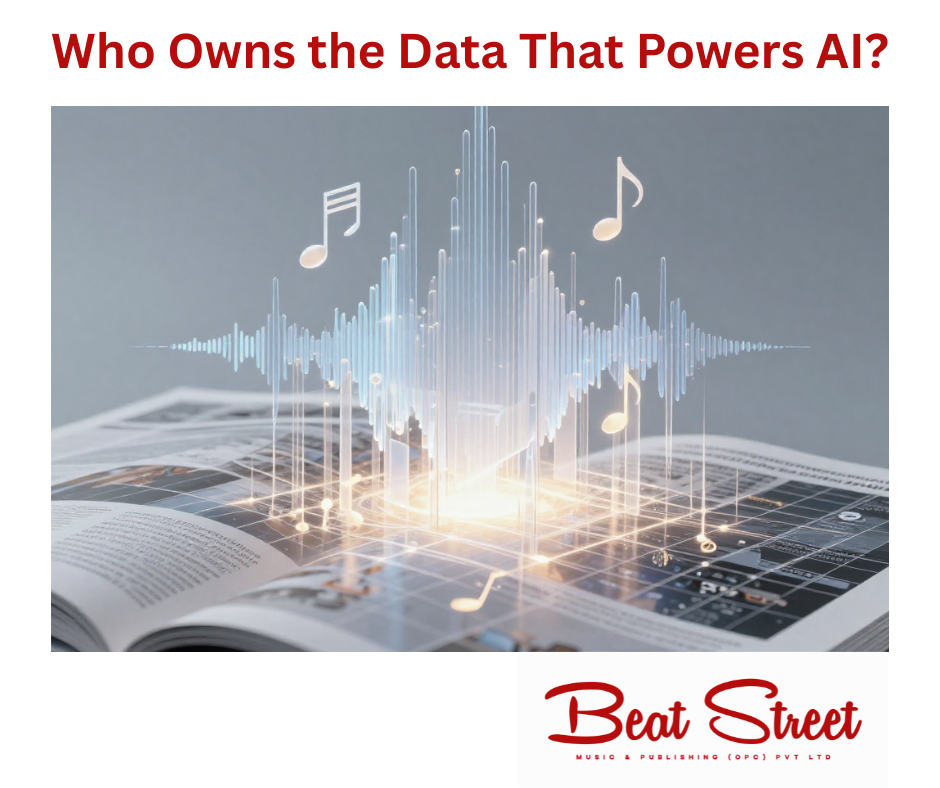
Who owns the data that powers AI?
The Gap Between Infrastructure and Governance
The India AI Summit highlights themes such as Safe and Trusted AI, Inclusion, and Democratizing AI Resources. These are necessary pillars.
India’s Digital Personal Data Protection Act, 2023 establishes a consent-based framework for data processing. But it does not yet clarify how principles such as consent, purpose limitation, and transparency apply when personal data is used for AI model training and refinement.
The law is technologically neutral. Neutrality, however, is not clarity.
This distinction matters strategically.
India’s digital ecosystem is vast and highly engaged. Global firms view it as an invaluable environment for testing, localisation, and iterative improvement. Offering AI tools at low or no cost benefits users immediately; while simultaneously generating feedback loops that refine models.
Access and data contribution are increasingly intertwined.
Without clear guidance on data provenance and training transparency, the balance between innovation and accountability remains undefined.
What the TRAIN Act Signals
The TRAIN Act establishes a simple principle: creators have a right to know if their work has been used in AI training datasets.
It is a transparency-first approach. Before debates about compensation, there must be visibility.
For Indian creators, this raises a practical question:
If your song, composition, or lyrical work has been scraped into a training dataset, would you ever know?
Under current Indian law, the answer is uncertain.
Europe’s GDPR has begun shaping conversations around AI consent and purpose limitation. India now faces a similar inflection point. Infrastructure and investment alone will not define leadership. Governance clarity will; because infrastructure shapes careers long before visibility does.
What This Means for Composers, Authors, and Publishers
Consider a composer in Kerala whose work becomes part of a training dataset for an AI music generation system. That system is used by a producer elsewhere to generate a commercially successful track. The composer recognises something familiar — but there is no registry, no disclosure, and no traceability mechanism.
This is not speculative fiction. It is a governance gap: one that echoes the concerns raised in the human authorship dilemma when machines begin composing at scale.
The conversations around the TRAIN Act and the India AI Summit converge on the same reality: the next phase of AI development will require clear standards on data provenance and accountability; not only for regulators, but for the creators whose work feeds these systems.
A Question Worth Sitting With
India has laid the foundations of data protection. Its AI ambition now calls for operational clarity.
Rather than drafting entirely new regimes, policymakers could clarify how existing principles apply to AI training contexts:
How does consent function in model training scenarios?
How does purpose limitation apply to dataset reuse?
What transparency norms should govern training data?
How can provenance and traceability be institutionalised?
These are not anti-innovation questions. They are structural questions.
For creators, the issue is more personal. Much like the early career publishing blind spot, structural clarity often arrives after value has already leaked.
Your work may already be in a training dataset. Your melodies. Your lyrics. Your voice.
The question is not whether AI will use creative works. It is whether creators will have the right to know; and whether the law will ensure they have a seat at the table when value is assigned.
The India AI Summit represents national ambition. The TRAIN Act represents creator visibility.
Both are ultimately conversations about the same issue:
Most changes in the music business do not arrive with noise. They arrive quietly, fixing something broken that everyone had learned to live with.
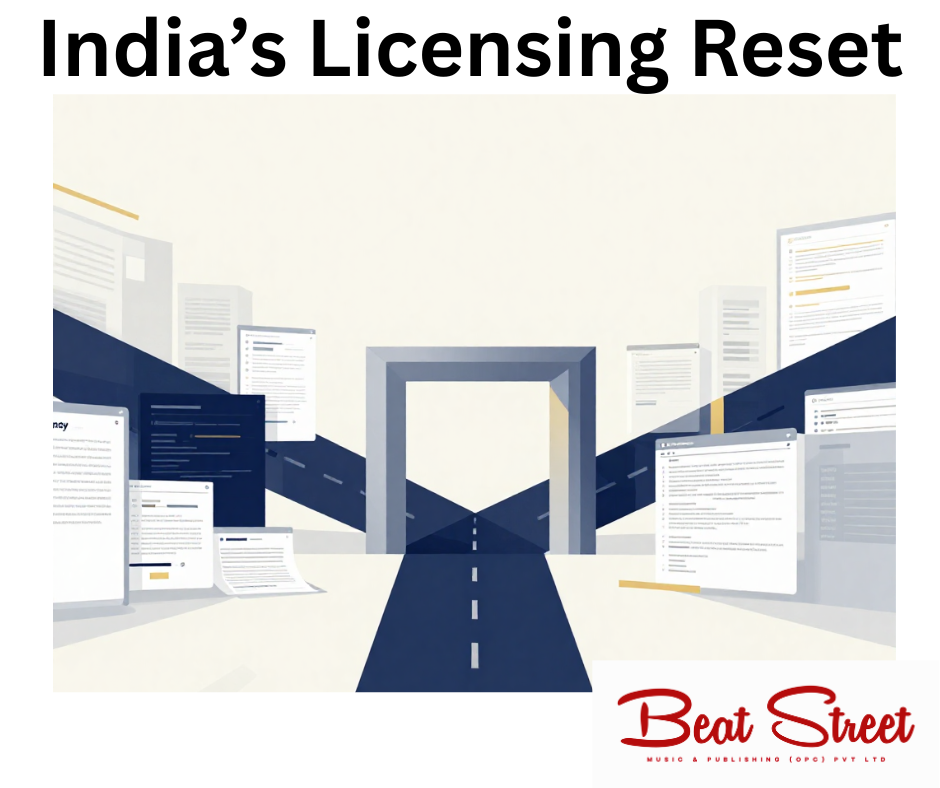
The launch of Sangeet Dwar, a single window licensing portal for public performance rights in India, is one such moment.
On the surface, it looks like an administrative improvement. A simpler way for event organisers, venues, and businesses to obtain music licences. But underneath, it signals something far more important.
It marks a shift from fragmented enforcement to structured access, from confusion to compliance, and from informal use to formal value recognition.
And that matters to everyone who creates, owns, licenses, or uses music in India.
The Problem Sangeet Dwar Is Trying to Fix
For decades, licensing music for an event in India felt less like a process and more like a puzzle with missing pieces.
Public performance licensing was fragmented. An organiser planning a concert, festival, hotel event, or corporate show often had to approach multiple rights bodies separately. Composers and lyricists through one society. Sound recording owners through another. Sometimes additional intermediaries depending on repertoire.
The result was predictable.
Many users avoided licensing altogether. Others licensed partially without understanding the gaps. Royalties leaked at scale. Artists rarely knew where their public performance income came from. Compliance felt hostile rather than accessible.
This was not always intentional misuse. In many cases, it was a system design problem.
When access is confusing, non-compliance becomes normal.
What Sangeet Dwar Changes
Sangeet Dwar brings multiple Indian music rights bodies together on a single digital platform for on ground public performance licensing.
Instead of navigating parallel systems, a user can now approach one portal, understand what is required, and obtain the necessary permissions.
This does three important things.
First, it lowers the friction to comply. Second, it standardises how licensing is presented to the market. Third, it makes public performance usage easier to document and track.
This is not about enforcement muscle. It is about system design.
Good systems do not scare people into compliance. They make compliance the easiest option.
Is This Model Borrowed From Elsewhere
Yes and no.
Single window or collective licensing systems exist in other parts of the world. Performing rights organisations in the US, UK, and Europe have long offered consolidated licensing for public performance. But India’s context is different.
In many global markets, the industry consolidated early. India grew fast, informally, and at massive cultural scale before its rights infrastructure matured.
Sangeet Dwar is not a copy paste of a western system. It is a late stage structural correction, adapted to Indian realities.
Importantly, the portal does not replace existing societies. It coordinates them.
That distinction matters. It means the system is being retrofitted to protect the value of a music culture that already exists at scale.
Where the Portal Still Feels Unclear
Early feedback from users reveals an important truth.
Even after signing up, many people are unsure what the next step is.
This is not a failure of intent. It is a normal gap in first generation infrastructure.
At the moment: • The licensing journey is not fully guided step by step • Fee calculation logic is not always clear upfront • Common use cases such as weddings, private events, or background music remain ambiguous • There is no visible call centre or live human support for time sensitive queries
For a system replacing multiple relationships and decades of informal practice, human assistance matters.
A single window portal works best when paired with a support layer. A call centre, live help desk, or assisted onboarding would significantly improve adoption, especially for smaller organisers who want to comply but do not know how.
Digital infrastructure scales best when backed by human clarity.
Why This Matters to Composers, Authors, and Publishers
Most composers and lyricists assume public performance royalties are rare or negligible. That belief exists because historically, the system was opaque.
When licensing is fragmented, royalty visibility disappears.
A unified access point increases the likelihood that performances are licensed correctly. That increases the probability that royalties are actually collected. Over time, creators begin to see the system as a reliable partner rather than a black box.
For the individual composer or author, the journey of a royalty from a hotel lobby or festival stage back to their account becomes more traceable.
For publishers, Sangeet Dwar represents a more efficient collection layer for the rights they administer. Clean, well registered catalogues become easier to monetise. Backend discipline starts showing financial results.
This does not mean every creator will suddenly see large cheques. But it does mean public usage is less likely to disappear without trace.
It is an urgent reminder that backend readiness matters.
Why This Matters to Event Organisers and Venues
For organisers, Sangeet Dwar reduces legal ambiguity.
Instead of navigating multiple societies or relying on partial advice, there is now a clearer path to compliance.
That reduces risk. It reduces last minute disputes. And it professionalises the live and public performance ecosystem.
For smaller organisers and venues, especially outside metro circuits, this could be the first time licensing feels accessible rather than intimidating.
What Sangeet Dwar Does Not Solve Yet
It is important to be precise.
Sangeet Dwar currently applies to public performance licensing. It does not replace digital licensing. It does not automatically fix royalty distribution. It does not resolve long standing issues around unregistered works or weak metadata.
The real significance of Sangeet Dwar is not the website itself.
It is the signal that India’s music industry is shifting from enforcement led thinking to access led design. From chasing infringements to enabling lawful use. From scattered systems to coordinated infrastructure.
This aligns with a broader quiet shift across the industry. Metadata discipline. Rights traceability. Publishing clarity.
These are not glamorous topics. But they are the foundations of sustainable creative careers.
Infrastructure is invisible only until it is absent. Sangeet Dwar is an attempt to make the invisible visible, and that is always the first step toward fairness.
What Creators and Rights Holders Should Do Now
The strategic response for composers, authors, and publishers is not passive hope, but active preparation.
If public performance licensing is becoming easier, ensure: • Your works are registered correctly • Ownership and splits are documented • Metadata is accurate across societies • Rights are not unintentionally assigned away • You can be found when usage happens
Systems only work when creators are ready to be seen by them.
A Closing Thought
Sangeet Dwar will not change careers overnight. But it will quietly change the direction of the industry.
Careers are rarely transformed by noise. They are shaped by infrastructure.
When access improves, value flows more honestly. When systems mature, talent gets a fairer chance to sustain itself.
This portal is not the finish line. It is a foundation being laid.
And foundations matter most before the building rises.
How I can help
If you are a creator, publisher, venue, or organiser navigating music licensing, rights structuring, or backend readiness, I now work directly with clients on licensing clarity and rights preparedness so systems work before usage happens.
Most artists grow up believing the same story. You write a song, it lands on a major editorial playlist, a scout from a three letter label calls, and suddenly you are on a private jet.
In 2026, that is not a career plan. It is a lottery ticket. And like all lotteries, the odds are designed so the house almost always wins.
If you have read my earlier writing on the early career publishing blind spot, you know my focus stays on the backend of music. I do this deliberately. Because the front end, fame, blue checks, viral clips, is increasingly hollow.
We are living through a quiet bifurcation of discovery. On one side are the mega stars. On the other is a growing, resilient middle class of musicians who are building real livelihoods without ever being famous.
Which one are you actually chasing.
The Death of the Big Break
The music industry used to resemble a ladder. Garage to club. Club to theatre. Theatre to stadium.
That ladder no longer exists.
Today, it has been replaced by an infinite, flat ocean of content. With more than 150,000 tracks uploaded every single day, being noticed is no longer the challenge.
Being retained is.
Labels are no longer gatekeepers. They operate more like high interest banks. They rarely break artists from zero. They identify artists who have already built momentum and then participate in the upside.
If you are waiting for a savior, you will be waiting a very long time.
The Math of the Hundred Thousand Dollar Artist
In 2026, the value of a passive listener is at an all-time low. The value of a committed fan has never been higher.
To earn one hundred thousand dollars from streaming alone, an artist needs roughly twenty five to thirty million annual streams. For the vast majority of creators, that is an unreachable mountain.
Now change the math.
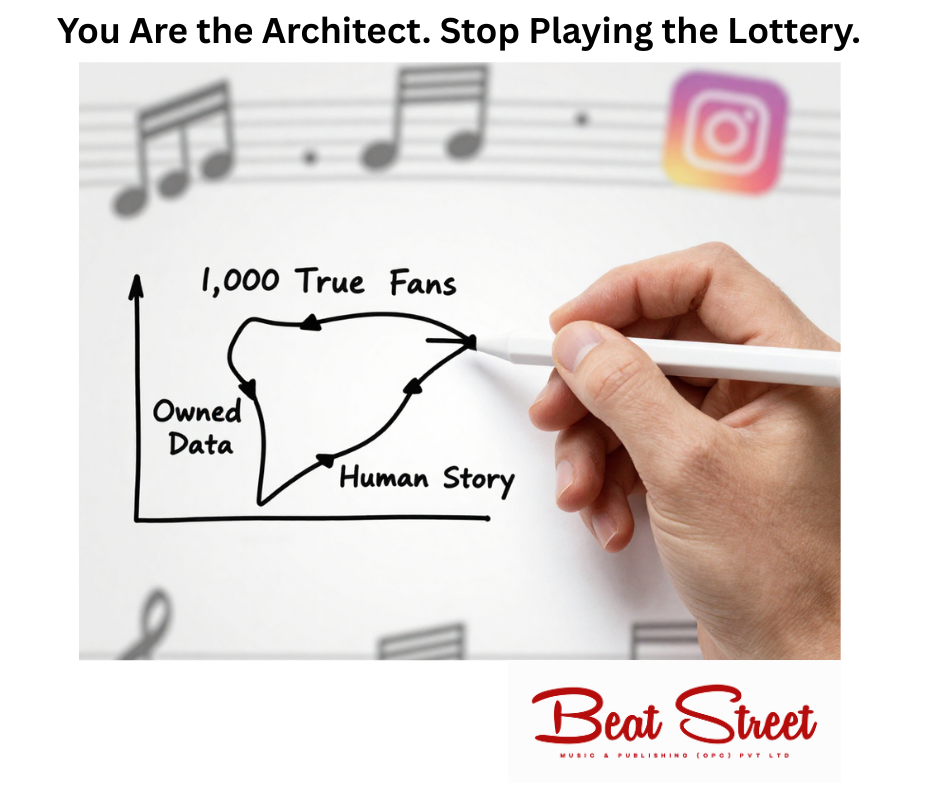
One thousand superfans. Each spending one hundred dollars a year through memberships, limited releases, live experiences, or direct support.
Total revenue. One hundred thousand dollars.
Which feels more achievable. Convincing one thousand people to care deeply, or convincing twenty five million strangers to stay for thirty one seconds.
This model only works if you own the relationship.
Which brings us to the three non-negotiable assets of the mid-tier artist.
Your Three Sovereign Assets
An owned list Your email or SMS list is your sovereign territory. It is the only channel that allows you to bypass rented platforms and shifting algorithms.
Clean metadata Your ISRC codes are your modern identifiers. If the data is unclear or incomplete, money does not disappear loudly. It leaks quietly.
A human moat AI can generate technically perfect music in seconds. It cannot tell the story of why you wrote a song at three in the morning in a damp room. That context builds trust. Trust converts listeners into long term supporters. That is your moat.
The Bottom Line
In 2026, the most dangerous place to be is visible but structurally weak.
Do not let the pursuit of attention replace the pursuit of durability.
Being a mid-tier artist is not a consolation prize. It is often the most sustainable outcome. It means you control your time. You retain ownership. You build a future that does not depend on constant permission.
Stop chasing virality. Start building something that lasts.
The shift from artist to sovereign business owner is slow, uncomfortable work. But it is also the work that allows careers to compound quietly over time.
The future does not belong to the loudest artist. It belongs to the most prepared one.
Publishing isn’t a problem until it’s a crisis. Here is why most artists miss the foundation until the house is already shaking.
For most artists, the first lesson in publishing isn’t a lecture: it’s a lost royalty. It isn’t a choice; it’s a missed opportunity.
Most artists do not ignore publishing because they are careless. They ignore it because no one explains it at the right time.
Publishing rarely enters the conversation when music is being created. It usually appears much later, after a song has travelled further than expected, or after money feels inconsistent, or after someone asks a question the artist cannot confidently answer.
Who owns this?
Who controls this?
Who gets paid when this is used?
By the time those questions arrive, the damage is often already done.
The Early Career Blind Spot
In the early stages, focus is naturally on the visible things. Writing better songs. Recording. Releasing. Building an audience. Getting noticed. These are tangible milestones and they feel urgent.
Publishing does not feel urgent at that stage. It feels abstract. Administrative. Something to deal with later. And because nothing appears to be broken, it is easy to assume nothing is wrong.
But publishing is not a problem that announces itself early. It is a foundation that quietly decides how far your work can travel without friction.
Why Publishing Feels Invisible Until It Isn’t
Publishing sits behind the scenes. You do not hear it. You do not see it on streaming dashboards. You do not feel it when a song is released.
You feel it only when your work starts being used, presenting itself as a sudden, pressing need for an answer you do not have.
A song gets covered.
A track is performed live abroad.
A reel travels faster than expected.
A sync opportunity appears.
A platform asks for clarity before moving forward.
That is when publishing stops being theoretical and starts being very real. Unfortunately, that is also when most artists realise they do not fully understand what they own, what they have assigned, or what they have never registered at all.
The Cost of Arriving Late
Discovering publishing late does not mean you earn zero. It means you earn unpredictably.
Leakage: Money is generated, but it has no path back to you.
Friction: A sync supervisor wants your song for a Netflix show, but they can’t find the split sheet. They move to the next artist.
The Momentum Tax: You spend your “breakout year” cleaning up legal messes instead of writing your next hit.
In many cases, the music is doing its job. The system around it is not. This is where careers quietly lose momentum. Not because of talent. Not because of effort. But because the backend was never designed to support growth.
Publishing Is Not About Control. It Is About Clarity.
There is a common fear that publishing means giving something away or locking yourself into rigid structures. In reality, good publishing does the opposite.
It gives clarity on ownership. It creates traceability across territories. It ensures credit travels with the work. It allows money to find its way back, even when usage happens far from where the song was created.
Publishing is not about restriction. It is about readiness.
Why This Keeps Repeating
The reason artists keep discovering publishing late is structural.
Education focuses on creation, not exploitation.
Platforms reward speed, not preparation.
Early income masks long term leakage.
Success often arrives before systems do.
By the time publishing feels important, artists are already running. Stopping to fix foundations feels risky, even though not fixing them is far riskier.
A Better Moment to Start Thinking
The best time to understand publishing is not after a hit. It is not after a deal. It is not after a dispute. It is when nothing feels urgent yet.
When you still have space to make decisions calmly.
When ownership conversations are simpler.
When registrations are clean.
When future growth will not stress test weak structures.
Publishing is easiest to set up before momentum arrives. It is hardest to repair once momentum exposes the gaps.
A Closing Thought
Most artists do not discover publishing too late because they failed to care. They discover it too late because the industry taught them to care about it last.
But careers that last are rarely built by doing everything louder. They are built by quietly putting the right systems in place early enough.
The first step out of this cycle is not a complex contract. It is a simple audit.
Day 1: Open a document. List your songs. For each one, write down:
Who wrote it?
Who owns the recording?
Is it registered with a performance rights society?
The gaps in that list are your starting point.
If you are an artist, songwriter, or label thinking about the long term life of your catalog, this is the moment to pause and look at the foundations.
I work with creators and rights holders to bring clarity to ownership, publishing, and backend systems before growth exposes the gaps.
If AI is trained on human music, shouldn’t credit and compensation travel back to the humans, not just the algorithms?
Copyright law has traditionally protected work that arises from human effort, intention, and creative judgment. In simple terms, it safeguards expression that can be traced back to a conscious human act.
This is where AI complicates things.
When a piece of music sounds indistinguishable from something a person might have composed, but the process behind it is largely automated, where do we draw the line for authorship? At what point does human involvement meaningfully shape the outcome, and when does it become closer to operating a tool?
If a creator tweaks a prompt, refines a few words, or nudges a model in a particular direction, does that intervention qualify as creative authorship? Or is it simply configuring a system rather than creating a work?
These questions may feel theoretical today, but they sit at the heart of how copyright will need to evolve. The law cannot rely only on how human the final output appears. It has to examine where creative judgment actually resides.
A Lesson From Recreated Works
The music industry already offers a useful reference point.
Take Ek Ho Gaye Hum Aur Tum from the film Bombay. The song was composed by A. R. Rahman, written by Mehboob, and sung by Remo Fernandes. Years later, when The Humma Song was recreated for OK Jaanu, the system did not erase the original work.
Rahman’s authorship remained intact. Mehboob continued to be credited as the lyricist. The recreated version openly acknowledged its lineage, even while adding new performers, new production layers, and a contemporary sound.
What changed was the expression. What did not change was the origin.
That distinction matters.
The recreated version extended the life of the work without disconnecting it from its source. Credit flowed backward as well as forward. Royalties followed attribution. This was not just ethical. It was good system design.
Now imagine applying that same logic to AI generated music.
If an AI generated track were required to transparently declare its source material and lineage, a composer sitting in a small town like Chaibasa in Jharkhand could still be credited and paid if fragments of their work informed a track released by an artist in Spain or anywhere else in the world.
That is the real opportunity here. Not erasure, but inclusion. Not fear, but design.
Where AI Forces a New Question
Copyright law protects works that arise from human labour, effort, and creative judgment. AI challenges this not because the output looks human, but because the process often is not.
Changing a sentence in a prompt or adjusting parameters may influence the result, but influence alone is not the same as authorship. The difficult task ahead is defining where human creativity meaningfully shapes the outcome, and where it stops.
This distinction matters because without it, we risk either denying protection to genuine human creativity or granting ownership where little creative judgment actually exists.
Global Signals Are Already Emerging
Around the world, the industry is responding in fragmented but revealing ways.
Bandcamp has taken a strict position by banning AI generated music entirely from its platform. Deezer has begun tagging AI generated tracks and is experimenting with systems to prevent AI driven streaming fraud from distorting royalties. Governments like the United Kingdom have publicly acknowledged the need to revisit copyright frameworks after strong pushback from creators.
These are not theoretical discussions. Platforms and policymakers are already shaping how AI music will be treated in practice, even as the law struggles to keep pace.
The Indian Context
In India, this conversation is still taking shape, but it has clearly begun.
Government bodies and policy groups have started releasing discussion papers and consultation notes examining how artificial intelligence intersects with copyright, licensing, and creator remuneration. These early signals reflect an acknowledgement that existing frameworks may not fully address the realities of AI assisted creation.
As of January 2026, no country has enacted a comprehensive AI specific copyright law. However, several jurisdictions, including India, are actively debating possible approaches. The focus so far has been on understanding authorship, accountability, and how value should flow when human creativity and machine systems operate together.
This moment presents an opportunity. India can learn from global debates while designing frameworks that protect creators without resisting technological progress.
A Question Worth Sitting With
The question is no longer whether machines can create convincing music. They already can.
The real question is whether our copyright systems are prepared to recognise, measure, and protect human creativity when it operates alongside machines rather than in isolation.
If we get this right, AI does not have to weaken creative economies. It could strengthen them, especially for creators who have historically remained invisible or underpaid.
But that only happens if we design for clarity, not convenience.
And that work, like most foundational work in music, happens quietly.
As technology evolves, how will you define your own authorship in the music you create?